
Anal Pain or Discomfort
What Is Anal Pain or Discomfort?
Anal pain or discomfort is the feeling of pain, soreness, burning pressure, or irritation in or around the anus. The discomfort may happen before, during, or after a bowel movement. It may also be lasting or episodic.
The intensity of anal or rectal discomfort can vary, with some reporting only mild pressure to others finding it disruptive even to everyday actions like sitting. The symptom may occasionally be a sign of a more serious bowel issue, so it may need assessment for diagnosis.
Causes of Anal Pain or Discomfort
There are several possible causes of anal or rectal pain, from fissures to tumours.
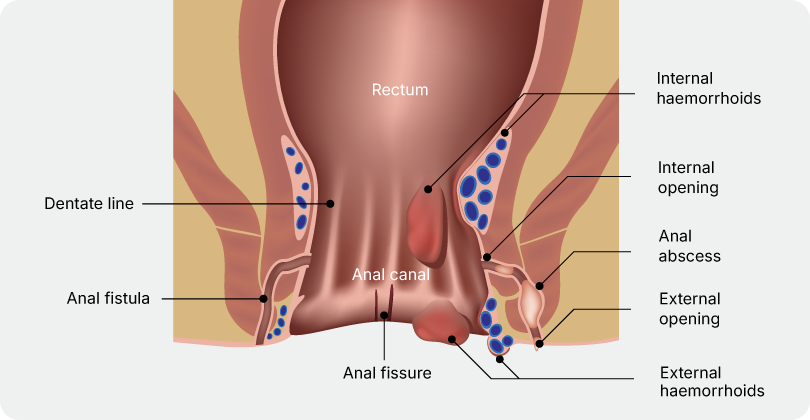
Anal Fissure
An anal fissure is a small tear in the lining of the anal canal. It is commonly associated with passing hard or large stools, constipation and straining, or repeated diarrhoea.
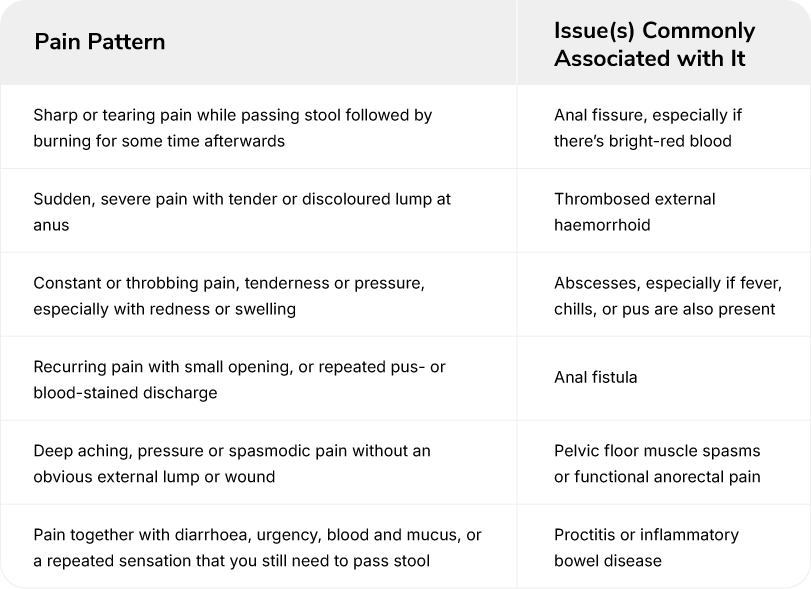
Anal fissure pain often presents as sharp, tearing discomfort during bowel movements. This may be followed by burning pain for several minutes or hours. Some mild bleeding may happen too.
Haemorrhoids
Haemorrhoids are swollen blood vessels and supporting tissue in or around the anus. They commonly cause bleeding or prolapse, while a blood clot can sometimes form in an external haemorrhoid. This can cause sudden pain and a tender lump near the anus.
Learn more about haemorrhoids.
Perianal Abscess
A perianal abscess is a collection of infected fluid or pus near the anus or rectum. Pain near the rectum is usually constant or throbbing. It may come with a red and swollen area, as well as a fever.
Deeper abscesses may cause significant pain or pressure, even without having an obvious lump on the outside.
Anal Fistula
An anal fistula is an abnormal tunnel that can develop between the anal canal and skin. It may come with recurring pain in the anus or surrounding area, irritation, and occasional drainage of pus or blood. The pain may get worse if the opening closes and another infection develops.
Learn more about anal fistulas.
Constipation, Hard Stools or Repeated Straining
Constipation, hard stools, and repeated straining can stretch and traumatise the anus. This can cause discomfort and contribute to problems like fissures and haemorrhoids.
Read more about chronic constipation.
Diarrhoea or Repeated Irritation
Diarrhoea can irritate the anal skin and contribute to anal fissures. Repeated wiping and moisture around the area due to overly frequent bowel movements may also worsen soreness or irritated skin.
Read more about persistent diarrhoea.
Skin Irritation, Dermatitis or Infection
Proctitis or Inflammatory Bowel Disease (IBD)
Inflammation can cause rectal pain or discomfort, urgency, a persistent sensation of needing to pass stool, diarrhoea, and blood or mucus in the stool.
Learn more about Inflammatory Bowel Disease (IBD).
Pelvic Floor Muscle Spasm / Functional Anorectal Pain
Levator ani syndrome can lead to a longer-lasting deep ache or pressure that may worsen while sitting. Proctalgia fugax can cause short bouts of pain. Both conditions are types of functional anorectal pain that can involve spasms or increased tension in the pelvic floor or anal muscles.
Anal or Rectal Tumours
These are less common but can cause persistent or worsening discomfort, bleeding, a lump, abnormal discharge, a feeling of fullness in the rectum, or changes in bowel movements.
How to Tell If You Have Anal Pain or Discomfort
When monitoring your anal pain or discomfort, track the following, as they can help doctors narrow down the cause of your issue.
- How painful it is
- When it occurs
- Is there a lump or swelling
- Do you notice bleeding, discharge, changes in bowel movements or fever
Certain pain patterns tend to be closely associated with certain causes, although a doctorʼs assessment is needed for confirmation.
See a Specialist on Anal Pain or Discomfort
If you are experiencing anal pain or discomfort, book an appointment for proper medical examination, diagnosis, and treatment.
What to Be Concerned About with Anal Pain or Discomfort
You should seek a doctorʼs assessment for anal pain or discomfort if you observe any of the following:
- Pain becomes severe, rapidly worsens, spreads or significantly interferes with sitting, walking, sleeping or normal daily activities
- Pain accompanied by fever, chills, redness, increasing swelling, or pus or discharge
- Heavy or continuous rectal bleeding, especially if you become dizzy, lightheaded, or faint
- Ongoing or recurrent rectal bleeding
- A new anal lump or mass that does not resolve
- Pain that repeatedly returns or does not improve
- Persistent changes in bowel habits or stool shape
- Persistent and unexplained loss of appetite or weight
These could be signs of a serious underlying condition and warrant early investigation.
How Anal Pain or Discomfort Is Diagnosed
During the consultation, your doctor may request a detailed medical history and discuss your symptoms, asking questions like these:
- The duration, character, or pattern of the pain
- How often the pain occurs
- How long you have had it and if it has changed since it began
- If anything seems to trigger it
- If other symptoms accompany it
During physical examination, your doctor will also inspect and feel the area around the anus. This may involve the following:
- Visual inspection of the anal and rectal area
- Checking for anal discharges or fistulas
- An anoscopy or proctoscopy to examine the anal canal and lower rectum
- Searching for redness, a swollen anus, tears or fissures, or signs of infection
- A digital rectal exam to feel for tenderness, masses, haemorrhoids, or other abnormalities in the anal
canal and rectum
Depending on your case, your doctor may also suggest added tests to help find the cause of your pain:
- Imaging such as ultrasound, CT, or MRI scans
- Biopsies to check for abnormal growths, persistent ulcers, and similar issues
- Sigmoidoscopy or colonoscopy, especially in cases with unexplained bleeding or IBD
Possible Treatments for Anal Pain or Discomfort
The treatment for anal pain or discomfort depends on its cause and severity.

Self-care for Mild Anal Discomfort
- Take warm sitz baths or warm-water soaks to soothe the anal area
- Maintain adequate fluid and dietary fibre intake to keep stools soft and easy to pass
- Avoid unnecessary straining and prolonged sitting on the toilet
- Clean the area gently instead of rubbing it to prevent further irritation
Medical Treatment for Common Non-Surgical Causes
- Prescription topical medicines for anal fissures
- Fibre or stool regulation and symptom-relieving medicines for haemorrhoids
- Medications or biologic therapies for proctitis or IBD, depending on the disease and severity
- Antibacterial, antiviral, or antifungal medication for some infectious diseases
- Pelvic-floor physiotherapy for pelvic-floor-related pain
Surgical Options for More Serious Cases of Anal Pain
Some causes of anal pain may require surgical treatment when conservative treatments are ineffective or when the underlying condition requires a procedure:
- Abscesses that require drainage, particularly when pus has collected and cannot be adequately treated with antibiotics alone
- Abnormal growths, especially cancerous ones
- Selected cases of painful thrombosed external haemorrhoids, particularly when treatment is needed soon after symptoms begin
- Chronic anal fissures that do not respond adequately to medical treatment
- Fistulas
Discuss Your Treatment Options with a Specialist
Early detection and diagnosis can help guide appropriate treatment for anal pain or discomfort. Book an appointment with our colorectal specialist for an assessment and discussion of your condition and treatment options.