
A Change in Bowel Habits & Painful Bowel Movements
A Change in Bowel Habits & Painful Bowel Movements
A change in bowel habits means your normal pattern of passing stool has shifted from what is usual for you. This can mean going to the toilet more or less often than you normally would, having harder or looser stools than usual, or noticing a persistent change in the shape or consistency of your stool.
Painful bowel movements refer to pain or discomfort when passing stool. Pain during bowel movement can occur before, during, or after you go. Depending on its cause, pain when pooping can also feel different: sharp, burning, aching, cramping, or throbbing.
Causes of Change in Bowel Habits & Painful Bowel Movements
There are several possible causes of a change in bowel habits or suddenly painful bowel movements, ranging from simple constipation to inflammatory conditions. In rarer cases, colorectal cancer may even be a cause.
Constipation or Hard Stools
Hard, dry, or lumpy stools can be difficult and painful to pass. Constipation often comes with straining, bloating, and a change in how often you go.
Anal Fissure
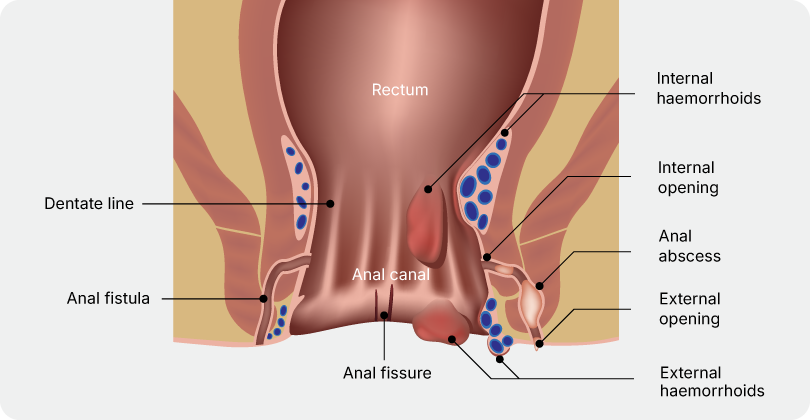
Anal fissures are small tears in the lining of the anus, often caused by passing hard, dry stools or frequent loose stools and diarrhoea. They typically cause sharp or severe pain during and after passing stool sometimes accompanied by bright red blood on the stool.
Haemorrhoids (Piles)
Haemorrhoids are often associated by chronic constipation, diarrhoea, and straining. Enlarged
haemorrhoidal tissue can cause rectal bleeding, itching, swelling, or a lump around the anus. A
thrombosed haemorrhoid, where a blood clot has formed, or a prolapsed haemorrhoid, which protrudes through the anus, can cause significant anal pain, particularly when passing stool.
Diarrhoea or Gastrointestinal Infection
Persistent diarrhoea has a wide range of causes, including food intolerances, IBS (Irritable Bowel
Syndrome), and IBD (Inflammatory Bowel Disease). Viral, bacterial, or parasitic infections can also lead to looser and more frequent bowel movements. Frequent loose stools can also irritate the anal area and contribute to fissures.
Irritable Bowel Syndrome (IBS)
IBS commonly causes repeated abdominal pain linked to bowel movements, along with constipation or diarrhoea. You may also notice bloating, urgency, or a feeling of incomplete emptying even after passing stool.
Inflammatory Bowel Disease (IBD)
Crohnʼs disease and ulcerative colitis cause inflammation within the digestive tract, which can lead to chronic diarrhoea, a change in bowel habits, abdominal or rectal pain, blood or mucus in the stool, fever, and weight loss. Crohnʼs can also lead to perianal abscesses or fistulas, which can make bowel movements painful.
Proctitis (Inflammation of the Rectum)
Proctitis is inflammation of the rectal lining. It can cause rectal pain, pain with bowel movements, diarrhoea, bleeding, mucus, and a persistent feeling of incomplete emptying. The causes of proctitis include IBD, certain infections, and previous radiation treatment.
Anal Abscess or Fistula
Pelvic Floor Dysfunction (Obstructed Defecation)
Sometimes, stool reaches the rectum normally, but the muscles needed to pass it do not relax or
coordinate correctly. This can lead to prolonged straining, a sensation that stool is “stuckˮ, and incomplete
Diverticular Disease (Diverticulitis)
This can be associated with constipation, diarrhoea, bloating, or cramping. When one of the diverticula (the small pouches in your intestines) is inflamed or infected, it can lead to severe and persistent lower abdominal pain together with changed bowel habits and symptoms like fever or nausea.
Medications and Changes in Daily Routine
Painkillers, certain antidepressants, iron supplements, and some blood-pressure medicines can lead to constipation. Meanwhile, antibiotics, metformin, magnesium-containing products, and some other
medications can lead to diarrhoea. Pregnancy, travel, dietary changes, and reduced physical activity can also temporarily change a personʼs usual bowel pattern.
Narrowing, Obstruction, Colorectal Polyps, or Colorectal Cancer
Narrowing or obstruction within the colon or rectum can cause a persistent, unexplained change in bowel habits. Colon cancer may come with persistent constipation or diarrhoea, a change in stool shape or consistency, rectal bleeding, incomplete emptying, abdominal discomfort, fatigue, appetite loss, or unexplained weight loss.
How to Tell If You Have a Change in Bowel Habits & Painful Bowel Movements
Rather than trying to self-diagnose, keeping track of your symptoms can help your doctor identify the possible cause. Pay attention to these in particular:
- Going to the toilet noticeably more or less often than usual
- A persistent change in stool consistency, e.g. when it is unusually hard, lumpy, loose, or watery
- Changes in the shape or calibre of stool
- Straining or difficulty passing stool
- A feeling that you have not emptied completely right after going
- Urgency or repeatedly feeling that you still need to go
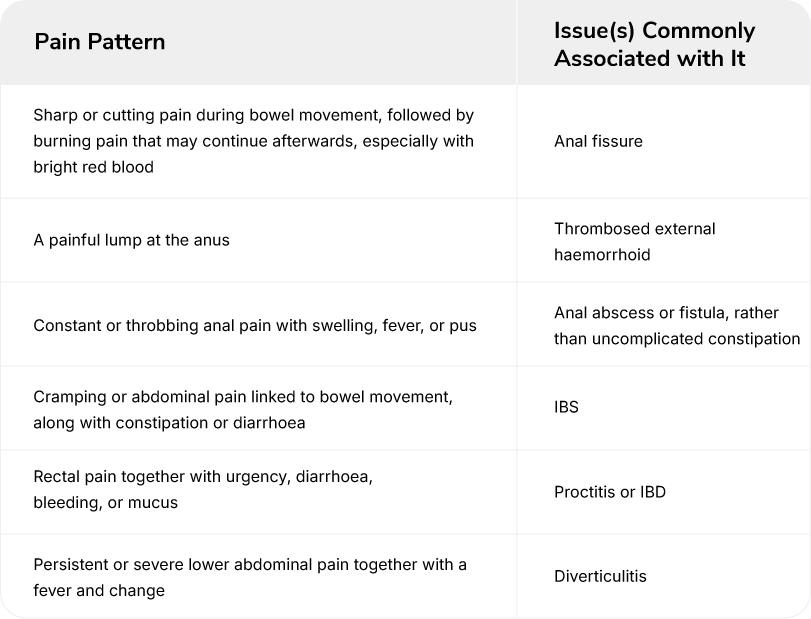
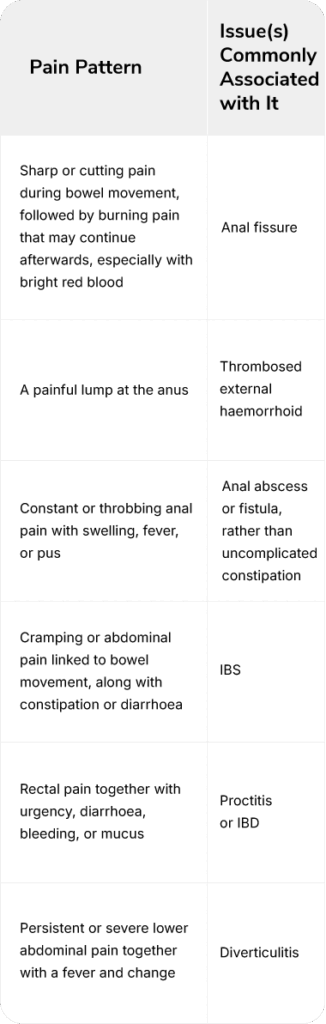
The pattern of your bowel pain may also be a useful clue. Here is what different pain patterns may point to:
Concerned About Your Bowel Health?
Experiencing changes in bowel habits or painful bowel movements? A
specialist can assess your symptoms and discuss the next steps.
What to Be Concerned About with a Change in Bowel Habits & Painful Bowel Movements
You should seek a doctorʼs assessment or urgent care if you notice any of the following:
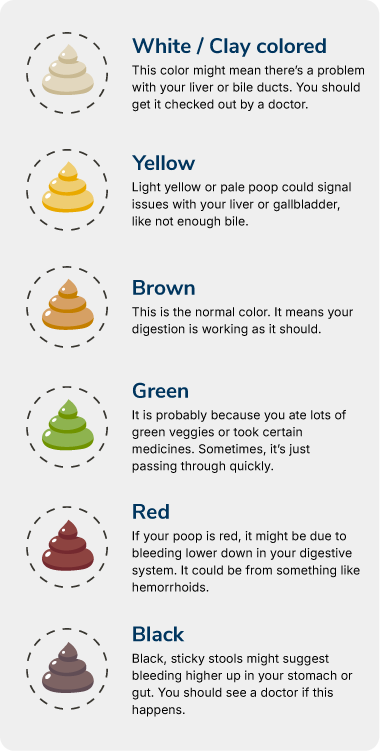
- Rectal bleeding or blood in the stool, especially if bleeding is recurring or unexplained
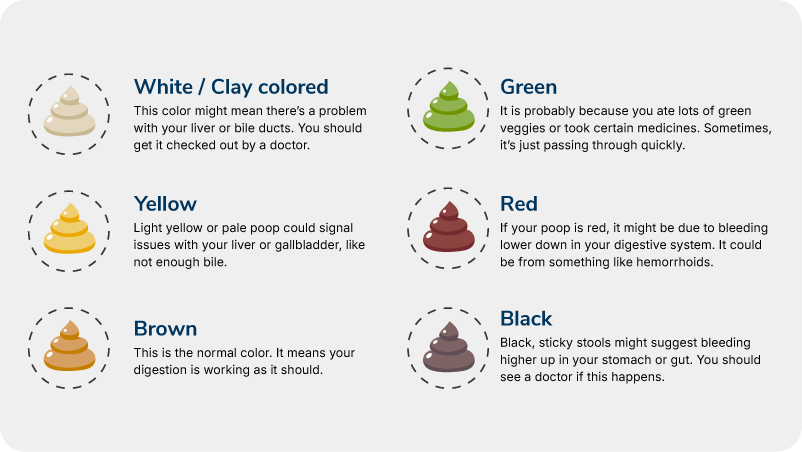
- Black or tarry stools, which can indicate gastrointestinal bleeding
- A bowel-habit change that does not settle
- Unexplained weight loss or reduced appetite
- Persistent fatigue, weakness, or known anaemia
- Severe or worsening abdominal or rectal pain that interferes with normal activities, persists, or becomes constant
- Fever or chills with anal pain, redness, swelling or drainage, which can indicate an anal or perianal infection or abscess
- Persistent vomiting, marked abdominal swelling, or an inability to pass stool or gas, which can be warning signs of bowel obstruction
- A new abdominal or rectal lump
- A family history of colorectal cancer or polyps
These could be signs of a more serious underlying condition, and deserve early investigation.
How a Change in Bowel Habits & Painful Bowel Movements Is Diagnosed
During the physical exam, your doctor may:
- Examine your abdomen to check for tenderness, swelling, distension, or an abnormal mass.
- Inspect around the anus for an anal fissure, swollen or thrombosed haemorrhoid, abscess, fistula opening, skin inflammation, or prolapse.
- Perform a digital rectal examination (DRE) to check for a mass, narrowing, impacted stool, tenderness, and anal muscle tone.
- Use an anoscopy or proctoscopy to examine the anal canal and rectum for abnormalities.
Depending on your symptoms and initial examination findings, your doctor may recommend further tests to help identify the cause. These may include:
- Imaging such as ultrasound, CT, or MRI
- Blood tests to look for anaemia, signs of inflammation, and infection
- Stool tests to check for infection, inflammation, or blood
- A sigmoidoscopy or colonoscopy to identify conditions such as inflammation, ulcers, diverticula, polyps, or cancers
- Anorectal manometry and balloon expulsion testing if difficulty emptying the bowel persists despite initial treatment
- Colon transit testing, to assess how quickly stool moves through the colon for people with difficult or refractory constipation
Possible Treatments for a Change in Bowel Habits & Painful Bowel Movements
Treatment for bowel habit changes and painful bowel movements depend on the cause and severity of the symptoms.
Self-Care for Mild, Short-Lived Bowel Changes
- Drink adequate fluids.
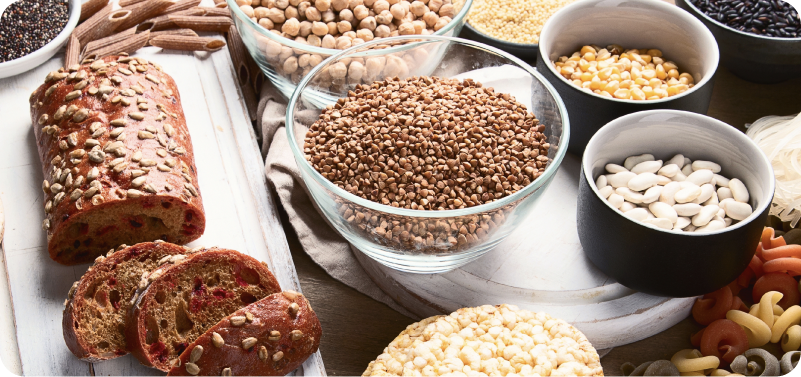
- Maintain appropriate fibre intake to make stool softer and easier to pass.
- Stay physically active where possible as regular movement can support bowel function.
- Avoid repeatedly ignoring the urge to pass stool, and avoid prolonged or forceful straining on the toilet.
- Try warm sitz baths to soothe anal discomfort and relax the anal muscles.
Medical Treatment Based on the Underlying Cause
- Constipation is often treated with dietary and lifestyle changes, along with fibre supplementation.
- Anal fissures are initially treated by keeping stool soft and easy to pass via adequate fluids, sitz baths, and prescribed topical medication.
- Haemorrhoids are often managed conservatively for mild symptoms, with more fibre added to the diet where appropriate and avoiding straining.
- Persistent diarrhoea is treated according to the cause, whether it is infection, a medication,
malabsorption, food intolerance, inflammation, or another bowel condition. - IBS may be treated with individualised dietary changes, bowel-specific medications, and other therapies.
- IBD or proctitis is treated according to its specific inflammatory or infectious cause, which may involve anti-inflammatory treatment, immune-targeting medication, and infection-specific therapy.
- Pelvic-floor dysfunction or obstructed defecation may respond to pelvic floor retraining and biofeedback to help you learn to relax and coordinate the muscles involved in passing stool.
Surgical Options for More Serious Cases
- Perianal abscesses may require drainage if antibiotics alone are insufficient.
- Anal fistulas may need a fistulotomy or another sphincter-preserving procedure, depending on their location and complexity.
- Persistent anal fissures or haemorrhoids may require surgery if conservative treatments do not provide sufficient relief.
- Colorectal polyps identified during a colonoscopy can often be removed during the same procedure.
- Surgery for colorectal cancer, significant obstruction, rectal prolapse, or selected severe bowel disorders depends on the specific diagnosis.
Discuss Your Treatment Options with a Specialist
Changed bowel habits or pain during bowel movements can affect your quality of life. Consult a colorectal specialist for an assessment and to discuss suitable treatment options.