
Understanding Colorectal Cancer
What Is Colorectal Cancer?
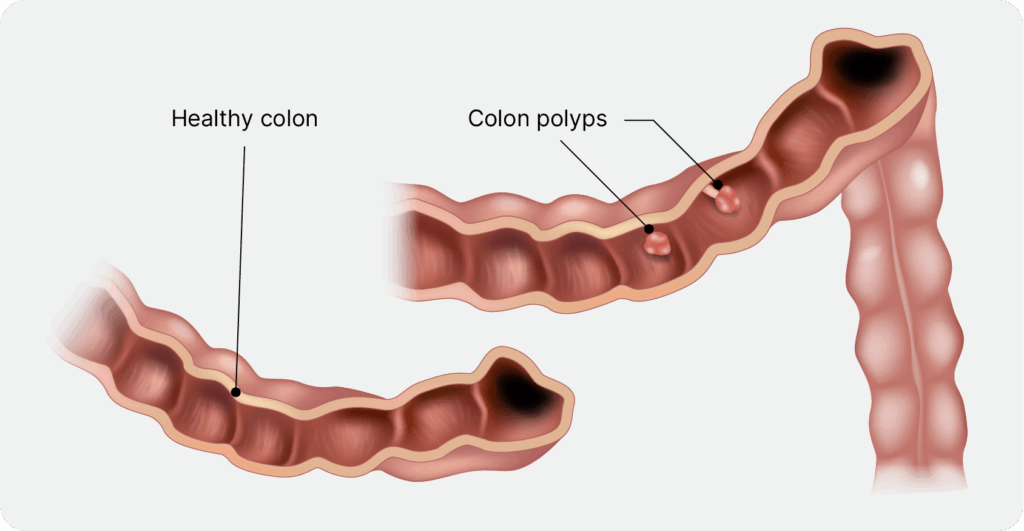
Colorectal cancer is a condition where malignant (cancerous) cells grow in the colon or rectum. It often develops from polyps.
This is the most common type of cancer for men in Singapore and the second-most-common type for women, second only to breast cancer. Like other cancers, it can be categorised into Stages 0 to 4 to indicate how far it has spread in the body.
The Causes and Risk Factors of Colorectal Cancer
The exact causes of colorectal cancer are not fully understood, but it often begins when cells in the colon or rectum develop genetic mutations that cause them to grow abnormally. These changes can lead to polyps or benign growths on the intestinal lining, which may develop into malignant tumours over time.
There are also several risk factors associated with a higher chance of colorectal cancer development:
- Being aged 50 years and above
- Having a diet high in red or processed meat, low in fibre, or high in fat
- A personal history of colorectal polyps or cancer
- A family history of colorectal cancer or inherited conditions like Lynch syndrome or familial adenomatous polyposis
- Inflammatory bowel disease such as ulcerative colitis or Crohn’s disease
- Smoking and heavy alcohol use
- Sedentary lifestyle and obesity
- Diabetes
Signs and Symptoms of Colorectal Cancer
Colorectal cancer often has no noticeable symptoms in its early stages, which can make early detection difficult.
If warning signs do eventually appear, you should seek medical attention to see if the symptoms are due to colorectal cancer or some other gastrointestinal conditions.
Here are the symptoms to look out for:
- Blood in your stools (visible or occult bleeding)
- Change in bowel habits, like persistent diarrhoea or constipation, or a change in stool consistency
- Feeling that the bowel does not completely empty after passing motion
- Abdominal pain or discomfort (bloating, fullness, gas)
- Unexplained weight loss and loss of appetite
- Constantly feeling fatigued or weak
- Anaemia (a low red blood cell count)
- Presence of a lump in the abdomen
Get Assessed and Diagnosed for Colorectal Cancer
If you believe you may have colorectal cancer or are experiencing the symptoms listed above, let our specialist assess and diagnose you.
How Colorectal Cancer Is Diagnosed
Your doctor will usually begin your clinical evaluation with a request for your medical history and ask about the symptoms you’re experiencing. You may also need diagnostic tests to detect polyps or abnormalities in the colon and rectum
For some of these tests, your doctor may prescribe you laxatives. This is to empty your colon for accurate test results.
Some key diagnostic tests your doctor may perform are the following:
- Digital rectal examination: Your doctor will insert a lubricated gloved finger into the rectum to feel for masses at the end of the colon.
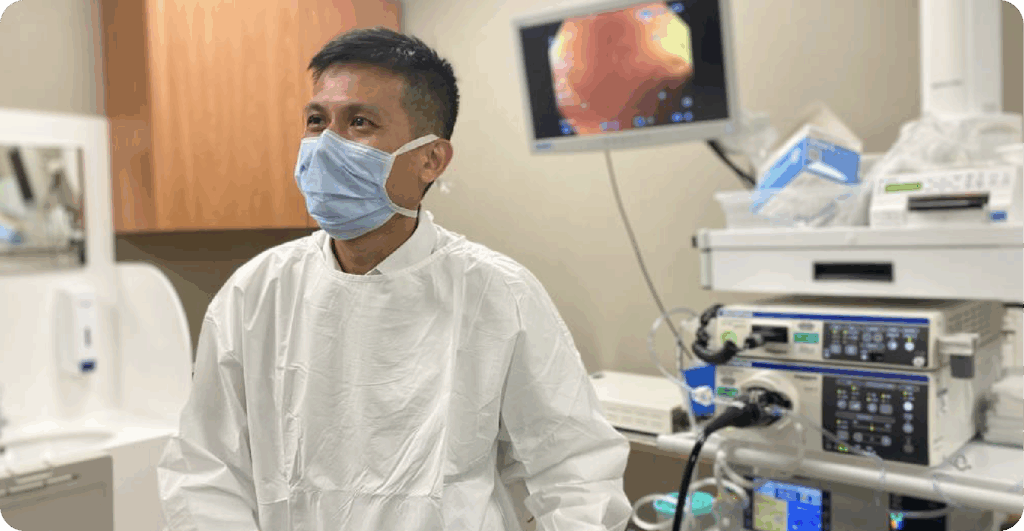
- Colonoscopy: A flexible camera can be inserted through the anus to examine the colon & rectum, and even remove small polyps or take tissue samples for biopsy.
- Scans such as CT and ultrasound: Imaging scans allow your doctor to see the extent of the tumour and check for spread or metastasis of the cancer.
- Tumour markers: A blood test can identify if you have high levels of carcino-embryonic antigen (CEA), which is a marker for colorectal cancer.
Potential Complications of Colorectal Cancer
As colorectal cancer advances, complications may occur. These include:
- Bowel obstruction: The growing tumour may block the intestine, causing severe constipation, pain, nausea and vomiting.
- Cancer spread (metastasis): Cancer cells can spread beyond the colon/rectum to nearby lymph nodes or distant organs (most commonly the liver and lungs).
- Cancer recurrence: Even after treatment, cancer can come back at the same site or elsewhere in the body. Regular surveillance is needed.
- Bleeding and anaemia: Tumours often bleed small amounts over time, leading to chronic blood loss and anaemia (low red cell counts).
Treatment of Colorectal Cancer
Treatment depends on the cancer’s stage, size and location, and on patient factors such as overall health. A multi-disciplinary team of surgeons, oncologists, radiologists is needed to assess and determine the best option.
Surgical Treatments
Most patients will need surgery to address colorectal cancer. This may be done with both open or minimally-invasive techniques, such as laparoscopic or robotic ones.
The options include:
- Polypectomy or local excision: For very early cancers or large polyps, the growth may be removed endoscopically or with a limited resection.
- Colectomy: Partial or segmental colectomy is the removal of the cancerous section of the colon or rectum along with nearby lymph nodes. The two ends of the bowel are then rejoined, which is called anastomosis. In some cases, the entire colon is removed – this is called a total colectomy.
- Colostomy: If reconnection is not safe initially, a surgeon may create a stoma or opening on the abdomen for stool to exit into a colostomy bag. This may be temporary or permanent.
Your doctor or oncologist will discuss the expected recovery time after the surgery, which is typically several weeks. You will also learn if you need additional procedures, such as the creation of a temporary stoma or post-surgery treatment like chemotherapy or radiation. Such treatments may be recommended to maximise the chances of eliminating the disease.
Chemotherapy
Chemotherapy uses anti-cancer drugs to kill cancer cells. These medications can be given individually or in combination, depending on the cancer’s stage and location.
Your oncologist will tailor the drugs and schedule to your case. The way it is administered and the number of cycles required varies from case to case.
Chemotherapy is often given:
- After surgery for stage II, III and some stage I cancers to kill residual cells and reduce recurrence.
- Before surgery to shrink a large tumour (neoadjuvant therapy), especially in advanced rectal cancer.
- For metastatic disease (stage IV) to control spread and shrink tumours.
Chemotherapy can have side effects like nausea, low blood counts, and hair loss. These will be managed by your care team.
Radiation Therapy
Radiation therapy targets X-rays to kill cancer cells. It’s mainly used for treating rectal cancer instead of colon cancer and is often given in small daily doses or fractions over several weeks.
The typical uses include:
- After surgery to destroy any remaining microscopic cancer cells and reduce recurrence risk.
- Before surgery to shrink a rectal tumour so it can be removed more easily.
- Palliative care if surgery isn’t possible, since radiation can help control symptoms like pain or bleeding by reducing tumour size.
There may be side effects like tummy pain, bowel irritation, and fatigue. However, they tend to be temporary. Your radiation oncologist will review potential benefits and side effects with you.
Targeted Therapy and Immunotherapy
Some newer cancer therapies target specific molecules or boost the immune system for results. These are generally used for advanced or metastatic cancers.
- Targeted therapy: Drugs that block growth signals in cancer cells (e.g. EGFR or VEGF inhibitors). These are often used together with chemotherapy in stage IV cancer treatment.
- Immunotherapy: Drugs that help the immune system recognise and attack cancer. This is usually given to patients whose tumours are mismatch-repair deficient or have high microsatellite instability (often related to Lynch syndrome).
These treatments can improve outcomes in certain cases. For example, your oncologist will test your tumour for markers (genetic profiles) to see if these therapies are suitable.
Emergency Treatment for Colon Cancer
A colon cancer emergency treatment may also be performed if the patient’s tumour perforates or obstructs the colon. This is an emergent situation because of the faeces in the colon, which can leak or cause poisoning if prevented from exiting the body normally.
The typical treatments for such cases are emergency surgery and decompression tubes. More urgent cases typically require surgery.
Recovery and Prognosis for Colorectal Cancer
The recovery varies by type of treatment:
- Surgery patients spend about 1-2 weeks in the hospital and several weeks at home regaining strength. If you have a temporary stoma, you will also learn stoma care before going home.
- Chemotherapy side effects usually resolve a few weeks after the last dose. A nutritionist or stoma nurse may advise you on diet and care throughout recovery.
Patients are monitored for at least 5 years with regular check-ups, blood tests, scans and colonoscopies. Follow-up is crucial as it is to check for cancer recurrence and manage any long-term effects of treatment.
The overall prognosis depends on the stage at diagnosis:
- When caught early and confined to the colon or rectal wall, colorectal cancer is often curable.
- Five-year survival rates are high for stage I/II disease (often over 80–90%), but lower if the cancer has spread.
Prevention and Management Tips
Early detection and healthy lifestyle habits can lower your risk of colorectal cancer. Below are some tips that may help you manage it.
- Regular screening: Get regular colorectal cancer screening from age 50 onwards (or earlier if you have risk factors). Early detection and polyp removal during colonoscopies can even help prevent it because this cancer often develops from polyps.
- Healthy diet: Eat plenty of fruits, vegetables and whole grains. Limit red and processed meats
- Stay active: Exercise regularly and maintain a healthy weight.
- Avoid smoking: Tobacco increases many cancer risks, including colorectal.
- Limit alcohol: Drink in moderation, if at all.
- Manage chronic conditions: If you have ulcerative colitis or Crohn’s disease, work with your doctor on surveillance and treatment, since long-standing inflammation raises cancer risk.
- Family history: Tell your doctor if you have close relatives with colorectal cancer; you may need earlier or more frequent screening.
Schedule an Appointment for Colorectal Cancer Screening
If you have symptoms or concerns about colorectal cancer, you can book a consultation with our specialist for an assessment. We can provide an early evaluation and propose a treatment plan if needed.